
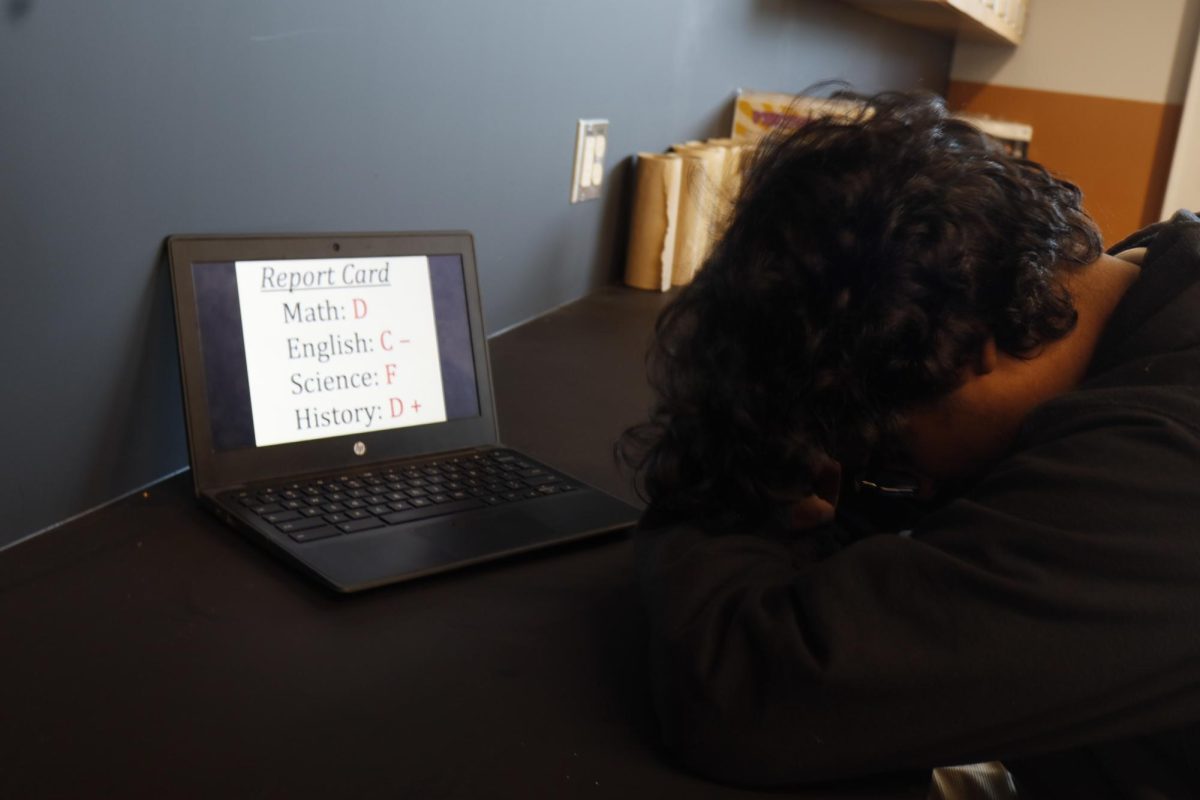
Senior year isn’t supposed to be the finish line. But for many students at LSHS, effort seems to disappear in the closing months.
Senioritis, is a term used to describe when seniors lose motivation in their final year of high school, and it seems to be taking over many students’ daily lives, turning once highly-motivated students into coasters who no longer want to do schoolwork.
While stress about the future and burnout from years of hard work are quite real, for most students, it’s just a plain lack of effort. Seniors are skipping homework, putting off projects, skipping class more than ever and no longer completing assignments to the best of their abilities.
“Like 10% of my work I actually care about and try on. I just don’t try anymore because we’re almost done, you know,” senior Brayden Briggs said.
While it’s easy to blame senioritis and the difficulty of the work, the real truth can be found with an honest evaluation of the students’ effort every day in the classroom.
High school isn’t the end of education for the majority of students. Sixty two percent of students go on to college or further education, yet many seniors act as if their effort doesn’t matter anymore and there’s nothing left to learn.
“I don’t do anything myself really. I use ChatGPT a lot, and copy answers from the keys,” senior Daustin Khounphixay said.
Students who participate less in critical thinking activities by not completing assignments themselves show unintended negative consequences in relation to psychological and cognitive ability, where the students’ capacity for memory and other metrics of intelligence are lower than what would be considered normal.
Senior year also offers many educational opportunities that students didn’t have access to in prior years. For instance, many seniors gain access to higher level AP courses that were unavailable to them in earlier grades due to prerequisite restraints.
These higher level courses are made to directly prepare high school students for college level coursework.
Even if a senior is not taking AP courses, the ability to complete work on time as well as the work ethic they develop still will indirectly prepare that student for college coursework.
“I don’t use any Chat GPT actually. I do my work by myself, so I can still learn before I go to college and do harder classes,” senior Kayson Ring said.
Colleges also continue to evaluate students all the way until they graduate, even after acceptance, making senior year grades more important than many people realize. A noticeable drop in performance can lead to academic probation, or even revoked admission offers.
Beyond admission consequences, students who coast through senior year are in for a hard reality check during their first quarter of college, where they will experience real college coursework for the first time.
Many degrees in college have designated “weed out” classes, which are introductory level courses such as General Chemistry, made surprisingly difficult to get rid of students who may not have the capacity to be successful in the higher level courses required for the degree.
Students who take the harder AP courses in high school when they have the opportunity, and where they’re arguably easier than the equivalent college course, will set themselves up for a lighter course load and more free time in college.
These AP courses give the student the ability to bypass quarters, and sometimes years of general education courses in subjects like English, chemistry, calculus, statistics and physics.
Graduation from high school is not the finish line. It’s the starting point for students’ lives. The way seniors choose to finish their final year says a lot about how prepared they are to begin whatever may come next in their lives.


