
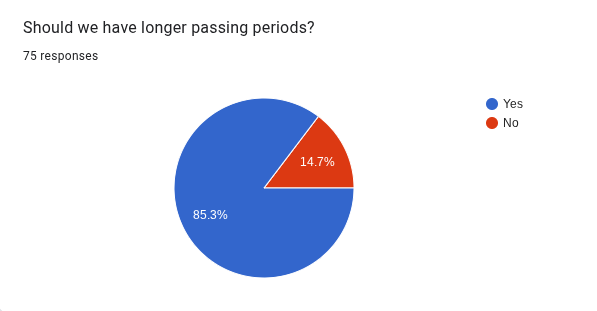
Have you ever needed to use the bathroom during passing periods? And the bell rings right when you get to the bathroom, making you have no time to use the bathroom and causing you to be late to class? Situations like this happen to students, making them question if we should extend passing periods.
Students feel like a longer passing period would be beneficial.
“Longer passing periods enable more time to use the bathroom, especially with how long some lines get, and also allows for a little bit of social time to clear your head so that you can focus on your next class, even if it’s 1-2 min longer,” sophomore Yuba Ayouni said.
Having longer passing periods would lead to better student engagement during class time by giving the students a tad more time to brain reset and calm their nerves.
Principal Leslie Ivelia commented that the time we have for passing periods doesn’t play a role in tardiness, and that it is the right amount of time needed to get from class to class.
“I think that the five-minute passing period affords us the opportunity to move with purpose and pace to get to our academic setting from class to class. I’m also very aware of different places on our campus that make movement in the hallways a little more challenging,” Principal Ivelia said.
It’s true that some places cause slower movements because of how small the hallways are. And other students agree with Ivelia about timing.
“We should not extend the passing periods, because I have classes all over campus, and I usually make it to all my classes before the 60 second bell, and I‘m always on time to class, a five minute passing period is plenty of time,” sophomore Ellie Walker said. Some students are able to get to classes on time, but not everyone can because some students have disabilities that affect their traveling time between classes.
For example, they either have a physical disability like a broken leg or they have a mental disability that affects their travel time. Although some of those students may have accommodations, some teachers may not know about their accommodations or forget and mark them tardy.
“With crowded hallways and classes spread out, five minutes isn’t a realistic amount of time to get from one end of the school to the other. Longer passing periods would reduce tardies and help classes start smoothly,” sophomore Ariana Ross said.
Ivelia explained if people were to spread out and use all of the doorways, the large number of people would definitely allow a better flow of movement in the halls.
Ivelia commented that, if we do extend passing time then we would have to extend the school day as a whole.


