
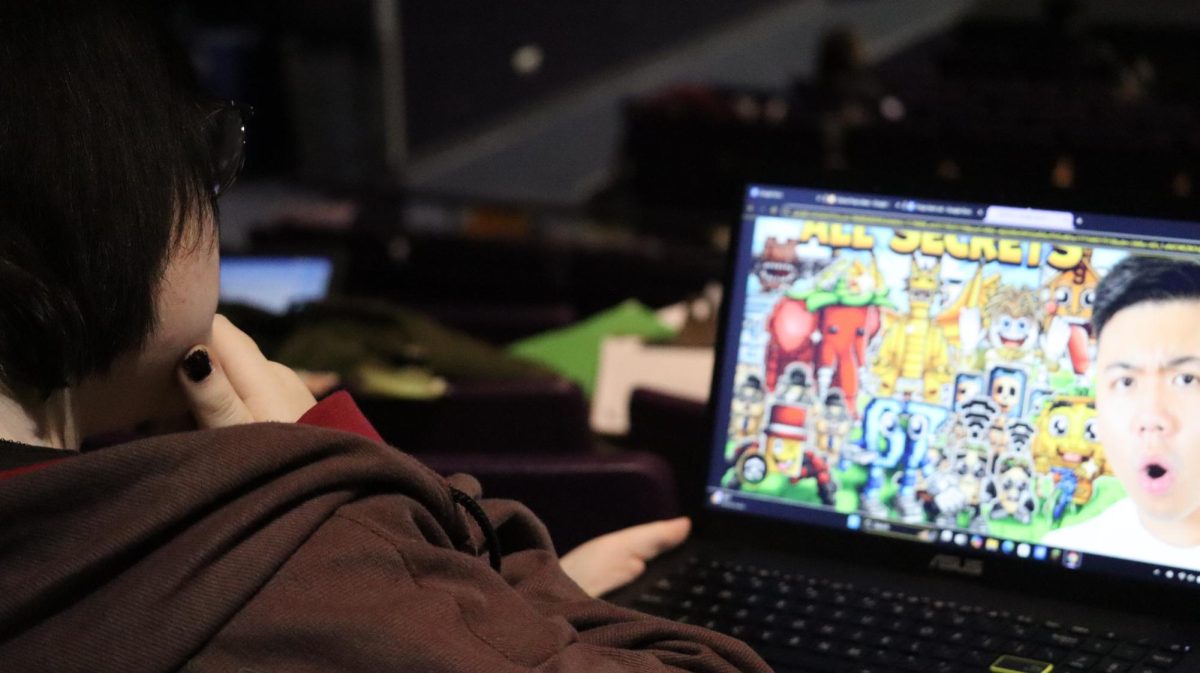
Slang has always been a way for teenagers to express identity and independence. Each generation develops its own vocabulary as a way of bonding. For high school students, using trending buzzwords can create a sense of belonging and shared humor. With platforms like TikTok, phrases that start as jokes online quickly become everyday vocabulary in hallways and classrooms.
Everyone is exposed to slang-related terms often labeled as “Brainrot.” Brainrot is described as repetitive, exaggerated, and sometimes nonsensical sentences. These trends are starting to dominate conversations. While some may see this as silly, harmless diction that is naturally evolving because of the internet, many students and teachers are worried about the decline in communication skills in normal everyday conversations.
When slang or brain rot become the default modes of expression, it can sometimes limit deeper conversation or make it harder to switch into more formal settings.
“My fifth-grade nephew can’t own up to anything because all he says when he’s caught doing something is bro and bruh,” math teacher Nick Borges said.
Another interesting aspect of modern slang is how unconsciously it slips into everyday conversation. When certain words are normalized and heard dozens of times a day, they stop feeling like “slang” and become regular vocabulary. This shows how strongly digital culture and media influence language habits through repetition.
Because trending phrases are repeated constantly on social media, students often begin using them without even realizing it.
“I feel like slang has already affected my conversations. I feel like having this conversation with you. I’ve already used, like, a million slang words, probably unintentionally,” senior Nadia Dunson said.
Much of the rapid spread of modern slang can be traced directly to trends on TikTok. The app’s short-form videos and algorithm-driven “For You page” will serve up videos of your interest. A single popular video or audio clip can turn an inside joke into a nationwide catchphrase almost overnight.
At the same time, the life cycle of slang has become shorter than ever. In the past few decades, phrases might last for a year or two, but today a word can trend for a few months before being labeled as “overused” or “cringe.” The fast pace of the internet encourages constant reinvention, with new terms replacing old ones almost immediately.
Ironically, terms that were once considered outdated can resurface humorously or nostalgically. This cycle reflects not only how quickly online culture moves but also how language continuously adapts and recycles itself.
Despite how common slang has become, many students admit that it feels “cringe” when teachers or adults repeat the same phrases. What sounds natural in a group chat or a TikTok comment section can feel forced in a classroom setting.
“I think they should avoid it. I think they make it stupid. I think at some point in your middle ages, it gets worse. But once you get old, then it’s really funny when you repeat it,” junior Mikael Lawrence said.
The speed at which trends rise and fall reflects the fast pace of the internet itself. Social media encourages constant creativity and reinvention. High school students are not just repeating words; they are experimenting with language in real time.
Despite its flaws, slang creates a shared language that connects people within a generation. For Gen Z, especially. Even when older generations attempt to use these terms, these moments still reflect an effort to understand and relate. Slang can become a bridge and a reminder that every generation has created its own language to connect with each other.


DAKOTA BROTHERS • Mar 5, 2026 at 8:16 am
Do you think that as these words become more common then the English language will evolve to incorporate slang as if its not slang? Therefore making it normal words some 50-60 years down the line.