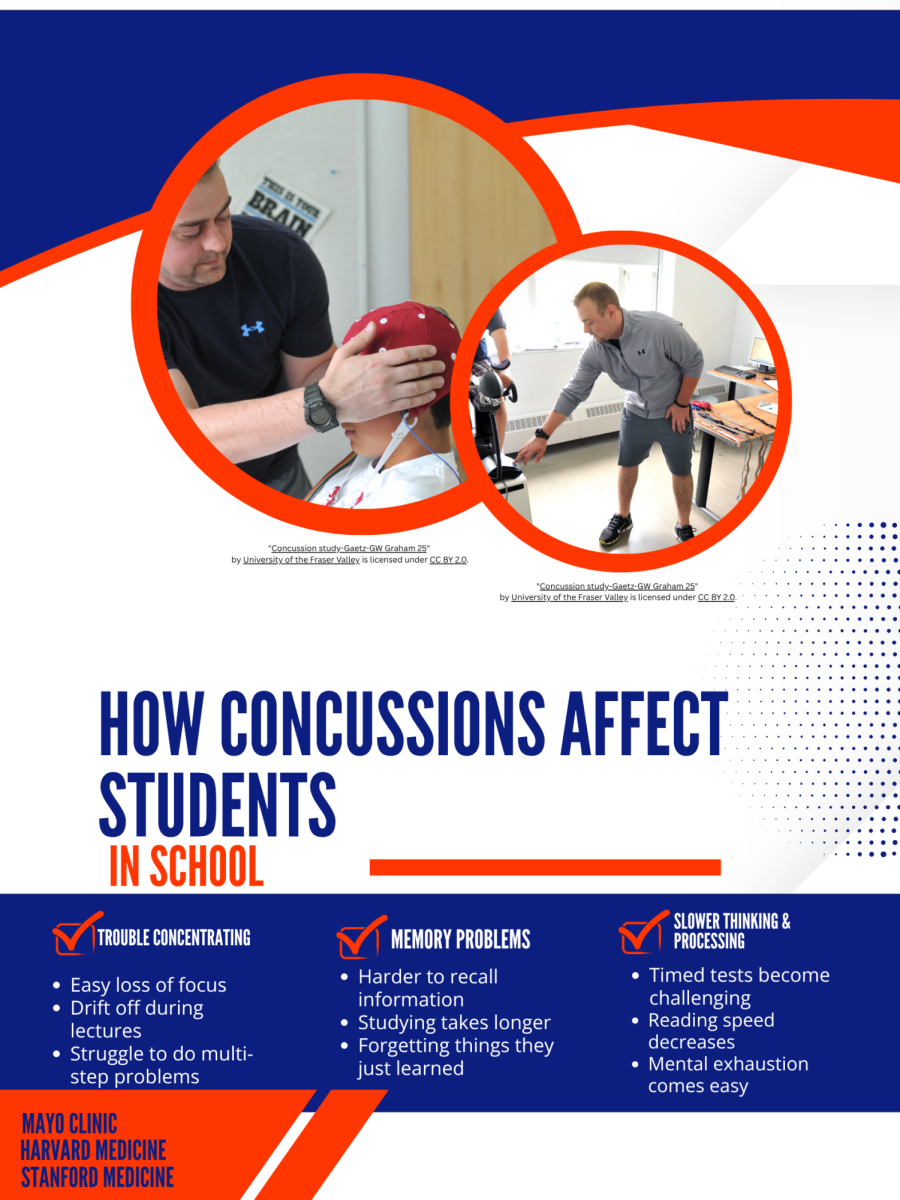
Every year, thousands of students around the United States face a concussion in their sport. While some recover within a few weeks, others struggle with lingering symptoms for years.
Many students believe a few days rest is enough to get back to normal, but research suggests that it is much more complex than that.
While some are lucky enough to recover quickly, students who have had a previous concussion are at a 46% higher risk for a mental disability in the future.
“I couldn’t do math in my head, and when I read, I would just forget. The stories didn’t make sense,” senior Koen Knutson said.
Concussion protocols require that students be removed from sports and school activity for a few days until cleared by a medical provider if there is suspicion that a concussion has occurred.
As awareness grows, schools and coaches are becoming more cautious of head injuries, but some students still feel that they still aren’t taken seriously enough.
“Sometimes people just brush it off like it’s nothing,” senior Alessandro Rush said. “You can’t see a concussion like a broken arm, so people assume you’re fine.”
But the long term effects of repeated concussions can be far more serious than people realize.
“My brain is scared to be hurt again, so my body shuts down when I’m exercising hard, it can make me collapse or cry,” Knutson said.
Experts warn that repeated head trauma increases the risk of chronic traumatic encephalopathy (CTE), a degenerative brain condition that people once thought only affected professional athletes like boxers.
Sometimes when symptoms fade, the effects of a concussion linger in subtle ways. Slower reaction times, fatigue, and the fear of reinjury all affect a students life every single day.
“I’m always scared of getting my head hit again, even out of practice,” Knutson said.
For many students, the concussion can affect not only their sport, but their whole life.
“I was unable to do schoolwork for a week and I couldn’t look at screens,” senior Sam Owen said. “Even after, I still get headaches when I try to focus.”
Coaches, teachers, and athletes all play a role in protecting one another from the long term effects of concussions and head trauma.
Taking concussions seriously, reporting symptoms accurately and taking the proper steps to heal can make the difference between a few days and a lifelong struggle.
At the end of the day, the scoreboard doesn’t matter; what matters is keeping the minds of young athletes healthy and functional for whatever may come next in their lives.