The four A’s— Academics, Athletics, Arts, and Activities— are categories that Lake Stevens High School uses to recognize students. Athletes are celebrated at state sendoffs, and academically outstanding students are honored at award ceremonies at the end of each semester.
The Drama Club pours weeks of hard work and effort into their plays and musicals, advertise everywhere throughout the school and town and always accumulate buzz and discussion surrounding their shows. The bands and choirs do the same, yet their performances seem to attract less people in attendance compared to the Drama Club’s productions.
Band and choir students put in hours of practice each week, both in and out of school, to make sure that they are ready to give the best performance they can to their audience.
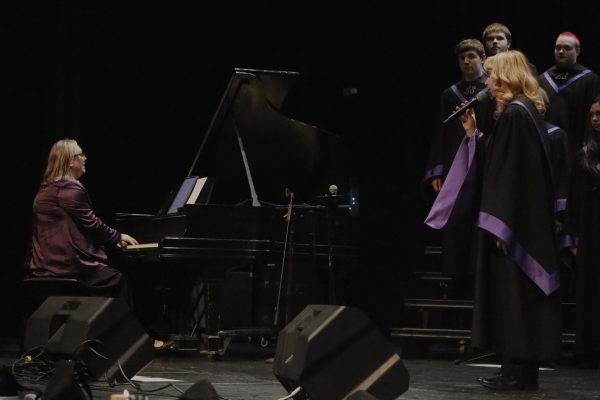
Wave Vocal Jazz meets before school, comprised of 13 students learning various jazz songs for concerts and many out of school performances throughout the year. In first period Concert Choir, over 40 students attend class every day and practice everything from arrangements of musical theater songs to acapella Italian madrigals.
Both jazz bands rehearse together or in sectionals during the zero period before school; Concert Band rehearses during fourth period and Wind Ensemble in fifth. A large number of band students take private lessons, are in community bands outside of school, and schedule their own sectionals on their own time.
But the work doesn’t end once the last dismissal bell rings, as both band and choir students practice outside of class.
“If there’s only a small section of the song, then maybe it takes like, 10 minutes or five minutes…But if it’s like a bigger piece, or it’s, like, the whole song…then it can be a couple hours,” senior Sara Scherer said.
The amount of time that students practice after school depends on how much learning they feel they need to do. There’s an aspect of self-reflection involved, especially when not every student is learning the same vocal part.
“I’d say probably like two to three hours a day…practicing music, practicing music theory,” junior Ethan Armbruster said.
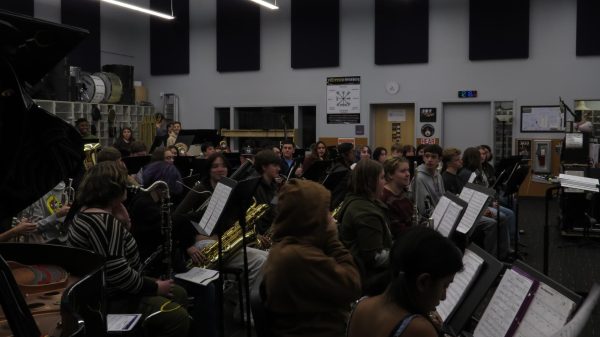
A lot of band students take time outside of school to learn their theory, as this is a large part of the course; it gives students the fundamentals they need to continue as a musician. This added amount of learning adds to the positive pressure on the kids, as they learn hand over fist how to grow their skills. The amount of learning on top of reading the music adds an extra factor of just how much work goes into these performances.
With all the effort put forth in and out of class, these students deserve nothing less than a full house, but that isn’t always the turnout.
“Choir concerts, about 35 percent. Band concerts, it’s a bit more, probably around 55 percent to 60 percent. It’s better filled, but there’s definitely a lot of space,” Scherer said.
So with all of this hard work and love put into getting ready for a concert, why should people go?
“There is a lot of great music and also just community. People laugh, it’s funny, there’s, like, different things that you can do,” Scherer said.
Indeed, the choir’s first concert of the year was one in which the audience was invited to follow along as members of the class led them in the warmups they do daily.
“It helps the people that aren’t in our programs understand more of what we do…For an ensemble Concert Band, for choir, they’re learning new music all the time, and they’re putting in…a different kind of work than we would have in a normal class,” senior Annabelle Middendorf said.
In addition to observing the unique work done and special community built within the band and choir classes, it means something to the students when people show up to view the product of all their dedication.
“Our parents are one thing, but, like, having our friends or classmates, like, join us and support us as well is also really important,” Armbruster said.
Going to choir and band concerts not only helps grow the community and gives people an insight into what goes on in these musical electives, but it shows support for students. Especially for elementary and middle school level students, attending concerts can open younger students’ eyes to more possibilities of what they could pursue later in their education.
“I remember when I was in the fourth grade, I went to a football game, and I saw the pep band and I was like, ‘Oh my gosh, I want to be one of those people one day,’” Middendorf said.
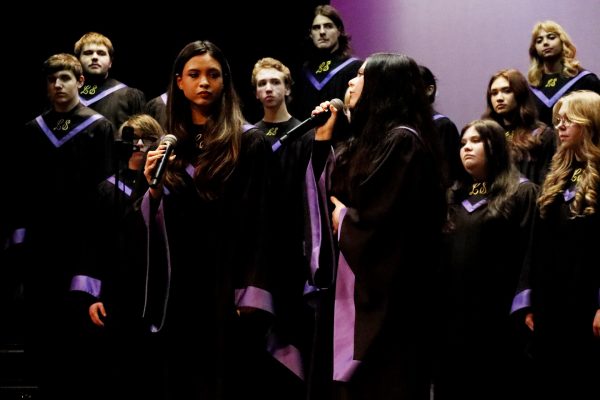
Many people listen to music. A 2014 study found that 93 percent of the U.S. population listens to music, and 35 percent of money spent on music was put toward tickets for live concerts. Music also activates almost all parts of the brain and gives way to emotional responses, releasing the “happy” chemicals in our brain and helping the different parts engage with each other. This creates an unforgettable and worthwhile experience for the listener.
If live music provides an engaging experience and is so popular, then why not show support for your peers by taking time out of your evening to go listen to them perform?
“All our concerts are free. There’s nothing stopping you guys,” Middendorf said.
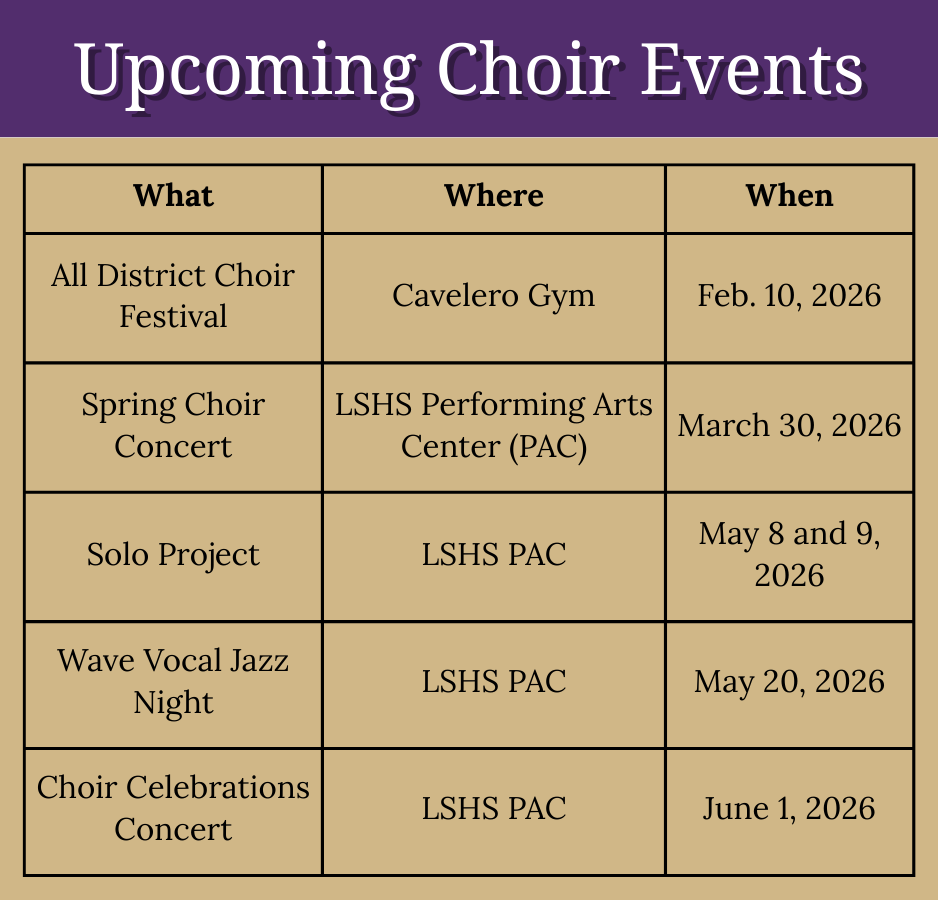
While the winter concerts have passed, that doesn’t mean that work is done for band and choir students. There are still plenty of performances and concerts to come.